African Delegations Seek Common Ground in Tunis Ahead of 2027 World Radiocommunication Conference
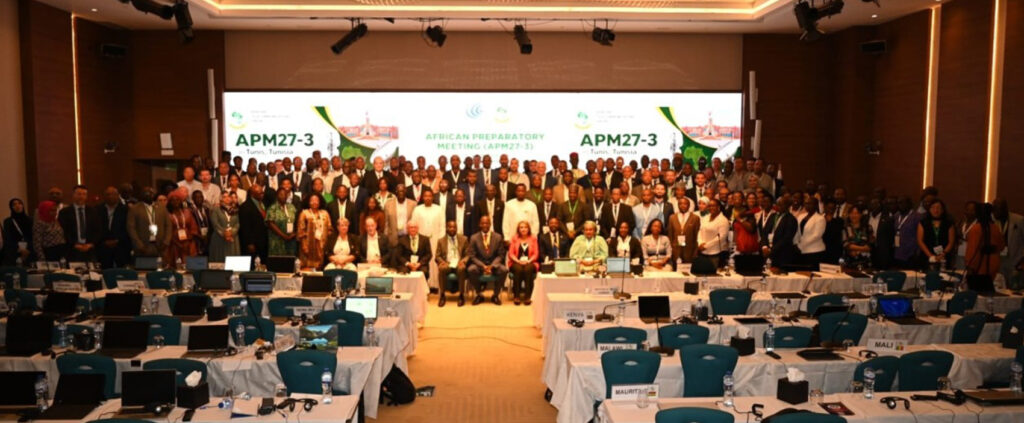
TUNIS, TUNISIA, 8th September 2026 – Representatives of African governments and telecommunications regulators have begun four days of talks in Tunis to strengthen common positions on the radio frequencies used by mobile, satellite and other wireless services, focusing on broadband capacity, rural connectivity and future communications technologies ahead of global negotiations in 2027.
Hosted by Tunisia’s National Frequency Agency and coordinated by the African Telecommunications Union, the talks form the Third African Preparatory Meeting for the 2027 World Radiocommunication Conference, which reviews international rules governing radio frequencies and satellite orbits. They follow the 11th Africa Spectrum Management Conference held in Tunis on 7th September and build on preliminary African positions developed in the first and second Preparatory Meetings in 2024 and 2025.
Opening the meeting, Ms Olfa Jammeli, Director General of Tunisia’s National Frequency Agency, Agence Nationale des Fréquences, called on administrations to use the Tunis discussions to resolve differences around common African interests rather than simply exchange national positions.
“Our objective cannot simply be to meet, exchange views and participate in the various sessions. We must use this meeting to search for compromises that preserve the common interests of the African region,” Ms Jammeli said.
Ms Jammeli said the discussions would need to address questions affecting future network development and the use of radio frequencies, particularly where countries do not begin from the same national position. She argued that compromise should help identify common African interests and develop positions that countries can defend together internationally.
Africa’s preparation for the 2027 conference began at the first and second Preparatory Meetings in Maseru in 2024 and in Nairobi in 2025, where preliminary African positions were developed on much of the agenda. The work in Tunis now takes that process into a more detailed stage, with countries refining those positions ahead of the next phase of international negotiations.
African Telecommunications Union Secretary General Mr John Omo said the work now before countries would need to give African delegations a strong basis for the negotiations ahead.
“The positions we define here have to withstand technical scrutiny, reflect the realities of our national administrations and give African delegations a sound basis from which to negotiate,” Mr Omo said.
Among the issues under discussion are whether additional radio frequencies should be made available for future mobile broadband services, how satellites can connect directly to ordinary mobile devices, and how new satellite systems should operate alongside existing services. Mr Omo said these questions have implications for mobile network capacity, rural and remote connectivity, resilience when terrestrial networks face disruption, and the protection of services already using the same frequencies.
The meeting also marked a change in leadership of the African preparatory process, with Ms Sana SOUAI LAKHAL of Tunisia’s National Frequency Agency taking over as Chairperson from Mr Mohamed A. Haji, Director of Standards and Resource Management at the Communications Authority of Kenya, who chaired the previous preparatory process in Nairobi.
“During this term, I am committed to maintaining the principles of solidarity, cooperation, objectivity and neutrality, and to protecting the interests of African Member States,” Ms Souai Lakhal said. She identified fair access to radio frequencies and the orbital resources needed for satellite services, sufficient frequencies for future mobile technologies such as 6G, and direct satellite connectivity to mobile devices as areas requiring particular attention, with the latter linked to extending connectivity to underserved communities.
Handing over the chairpersonship, Mr Haji reported that all seven expert groups supporting Africa’s preparations had met since Nairobi and now had positions ready for consideration. The Nairobi meeting drew close to 550 participants, and work since then has focused on refining preliminary positions and resolving outstanding issues before a 3rd October deadline for African inputs to a technical and regulatory report that will help guide the 2027 global conference.
The meeting continues in Tunis through 11th September, with African governments and regulators working alongside the International Telecommunication Union and other regional groups. Its outcomes will feed into the April 2027 technical preparatory meeting in Geneva and the subsequent development of common African proposals for the global conference in Shanghai, China, in October and November 2027.